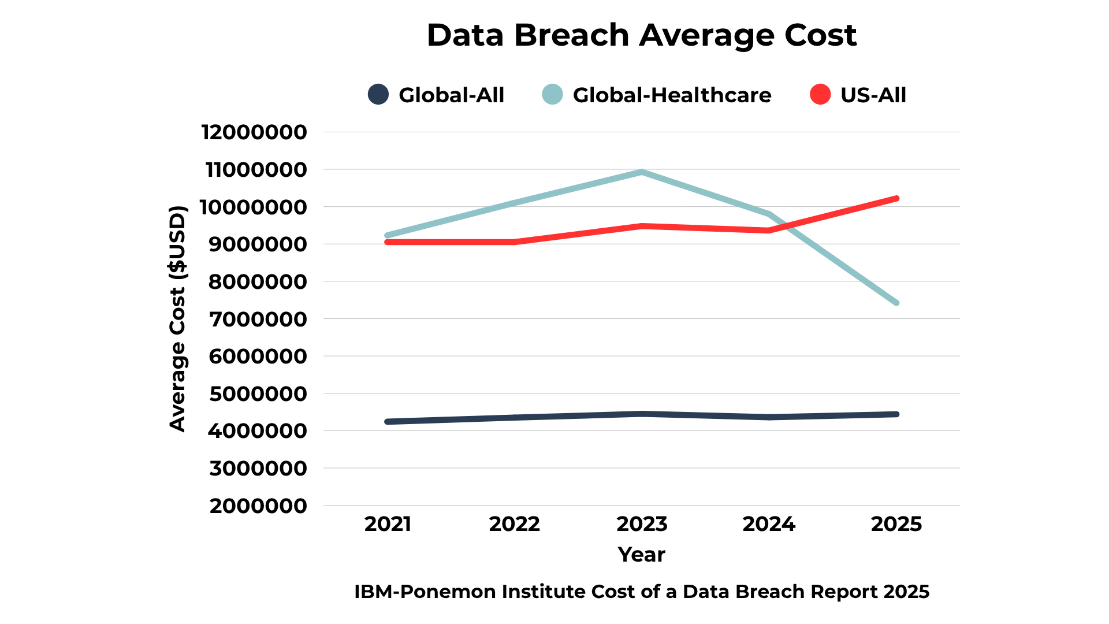
According to recent data from an IBM–Ponemon Institute report, healthcare continues to be the most expensive industry for data breach costs globally. Even though global average costs have dipped slightly in recent years, the financial impact is still very large.
The cost for data breaches in the United States generally (including all industries) have actually increased. The average cost is now $10.2M per incident in 2025.
Why are Costs Higher in the U.S.?
The reason costs are so much higher in the U.S. is multifaceted. This is probably due to:
When you look at your overall risks, a potential data breach is likely to be one of your top priorities.
What Makes Up a Breach's Total Cost?
The final bill for a data breach is complex and often includes several components. The costs can include:
Actionable Steps to Reduce Your Risk
The good news is that taking some basic steps to minimize risk can be straightforward and inexpensive. If you haven’t done some of these things—Do them! They can significantly reduce your exposure.
Key steps include:
Data breach costs remain stubbornly high in the U.S. When thinking about compliance, addressing this issue head-on is a good place to start. It can protect your business, your customers, and patients. And it may give you some peace of mind.


HTI-5 removes several certified health IT requirements, but will it meaningfully reduce regulatory burdens? What health IT developers should consider as market expectations and customer demands remain.


Explore why HHS has delayed the proposed HIPAA Security Rule update until at least July 2027, what drove the decision, and what healthcare organizations should consider when strengthening cybersecurity and protecting sensitive patient information.